LYMPHIR is available for use.
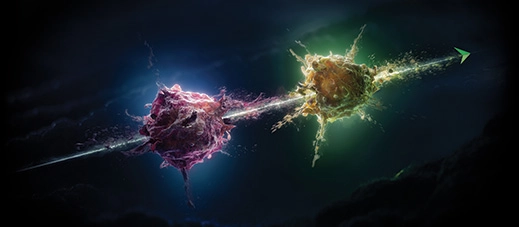
LYMPHIR was designed as the only systemic treatment for relapsed or refractory CTCL to target the IL-2 receptor on malignant T cells and Tregs1
LYMPHIR is a recombinant fusion protein that is composed of IL-2 coupled with diphtheria toxin fragment1
LYMPHIR binds to the IL-2 receptor on the cell surface, which drives its internalization into the cell2
Once internalized, diphtheria toxin fragments are cleaved from IL-2 to inhibit protein synthesis and induce apoptosis1,3

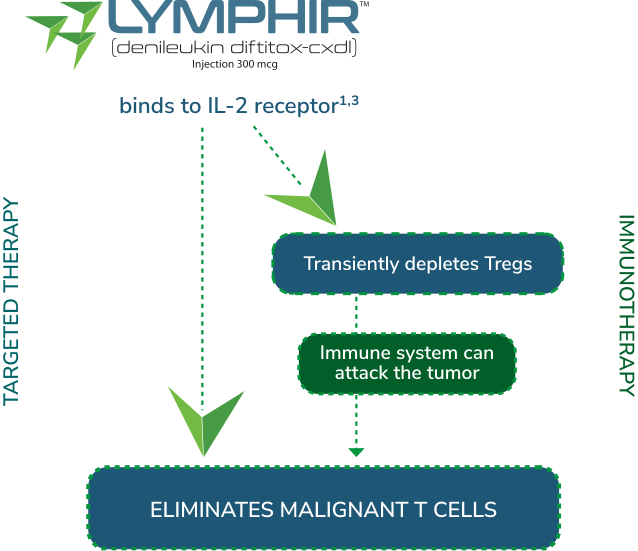
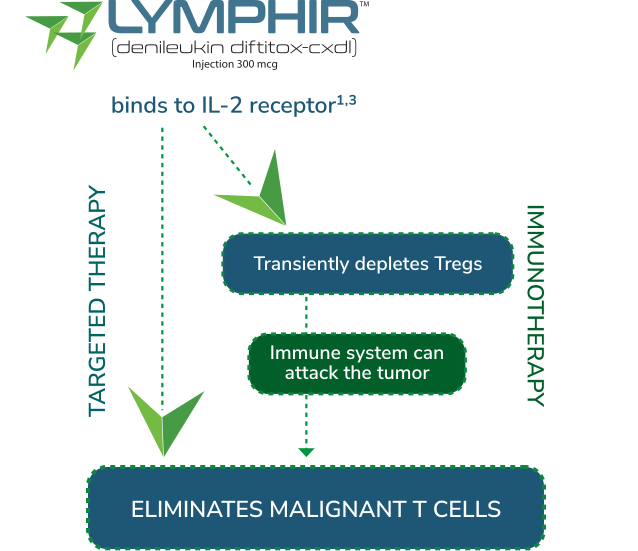

LYMPHIR mechanism of action
See how LYMPHIR works to treat CTCL
TRANSCRIPT×
LYMPHIR is indicated for the treatment of adult patients with relapsed or refractory Stage one through three cutaneous T cell lymphoma after at least one prior systemic therapy.
LYMPHIR has a boxed warning for capillary leak syndrome, which can be life-threatening or fatal and can occur in patients receiving LYMPHIR.
Monitor patients for signs and symptoms of CLS during treatment. Withhold LYMPHIR until CLS resolves or permanently discontinue based on severity.
LYMPHIR is an FDA-approved treatment for CTCL that was designed to target malignant T cells and immunosuppressive Tregs through the IL-2 receptor.
In CTCL, malignant T cells proliferate and may spread to other areas of the skin, blood, lymph nodes, and other organs.
Regulatory T cells, also known as Tregs, function to suppress immune responses, within the tumor microenvironment. This decreases the ability of host immune cells to effectively kill malignant T cells.
Notably, malignant T cells and Tregs share a common marker: the interleukin 2, or IL-2 receptor. LYMPHIR takes advantage of this shared receptor.
LYMPHIR is composed of IL-2 coupled with a diphtheria toxin fragment. A relatively small recombinant fusion protein, it targets malignant T cells and Tregs in the tumor microenvironment by binding to the IL-2 receptor.
This drives internalization into the cell. Once internalized, the diphtheria toxin fragment is cleaved from IL-2. This toxin inhibits protein synthesis and induces apoptosis. This toxin inhibits protein synthesis and induces apoptosis.
LYMPHIR kills malignant T cells and transiently depletes Tregs. This allows the body's own immune response to join in the attack.
Because the half-life of LYMPHIR is about 112 minutes, it does not last long in the body. This allows the body to replenish immune cells, including Tregs, after each treatment cycle.
LYMPHIR was designed as the only systemic treatment for relapsed or refractory Stage I-III CTCL to target the IL-2 receptor on both malignant T cells and Tregs to effectively deplete these key cell types.
References: 1. LYMPHIR. Prescribing information. Citius Oncology, Inc.; 2024. 2. Foss FM. DAB389IL-2 (denileukin diftitox, ONTAK): a new fusion protein technology. Clin Lymphoma. 2000;1(suppl 1):S27-S31. doi:10.3816/CLM.2000.s.005 3. Data on file. Citius Oncology, Inc.
NEXT: Learn more about LYMPHIR efficacy